Performance partsBy the BVT Tuning team · October 28, 2026 · 4 min read
Catted vs catless downpipes: flow, sound and tune
What a high-flow or catless downpipe changes on a turbo car — freer flow, quicker spool feel, more sound — and why a matching tune matters.

A downpipe sits right after the turbo. Stock ones are narrow and packed with a dense cat, so exhaust gas stacks up behind the turbine. Swap it for a high-flow or catless pipe and that bottleneck opens up. The turbo sheds gas faster, the spool feel sharpens, and the exhaust note gets deeper and louder.
This guide covers catted vs catless downpipe choices for turbo cars we see in Quezon City: EcoBoost Mustangs, turbo BMWs, and similar builds. What the pipe changes, and why the software has to match.
What a downpipe actually does
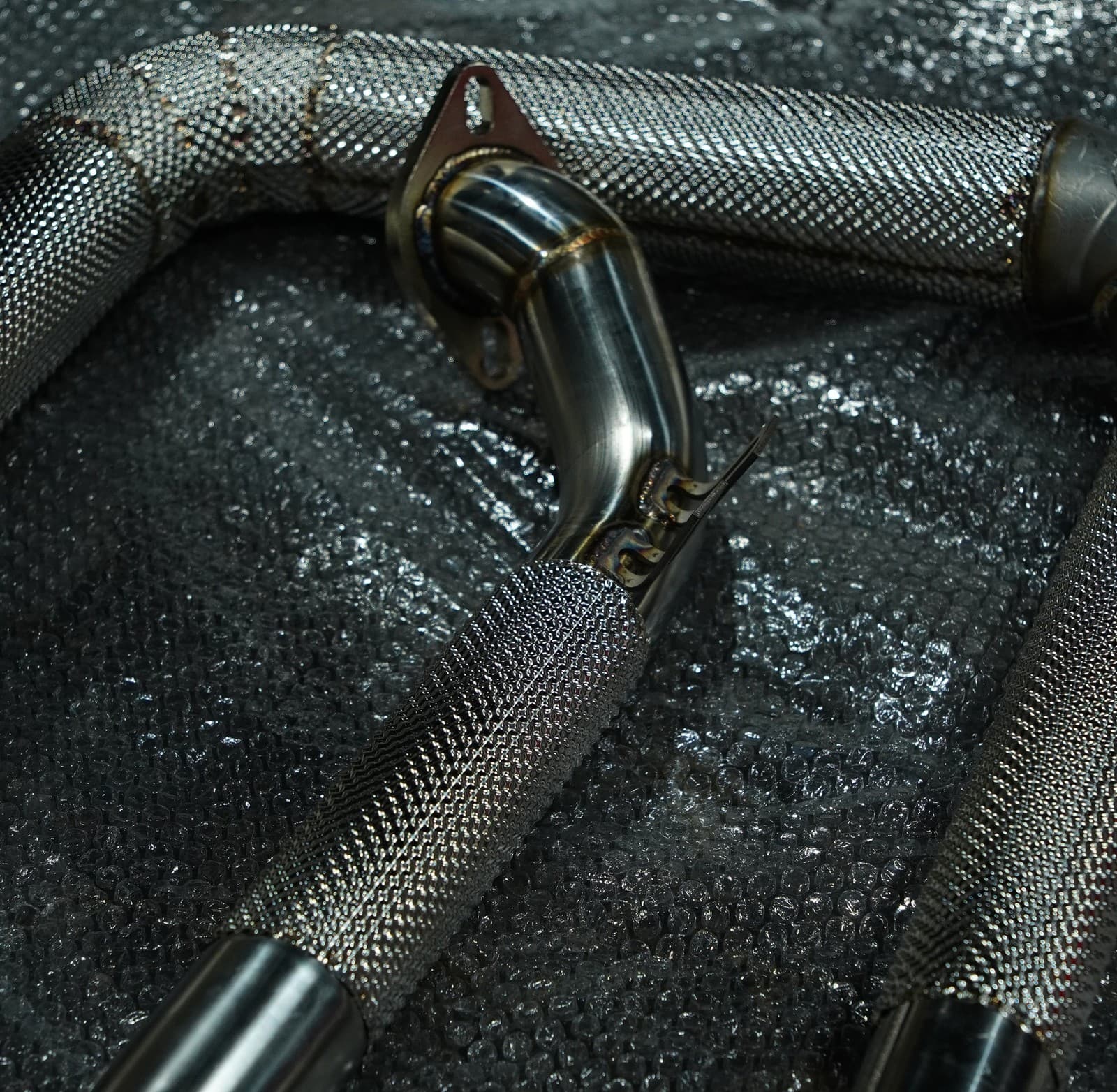
The downpipe is the first pipe out of the turbo housing. Everything after it — midpipe, cat-back, tips — only sees what this section lets through.
Factory designs trade flow for quiet running and packaging. Larger tubing, smoother bends and a high-flow cat (or no cat at all) cut that restriction. Less backpressure means the turbine spins up with less fight. You feel that as earlier boost and a harder hit when you open the throttle.
It is also one of the first hardware steps people take before a supporting-mod ECU remap (pipe plus software together).
High-flow catted vs catless
| High-flow catted | Catless |
|---|---|---|
Restriction | Much freer than stock; still has a sport cat | Open path, no cat section |
Sound | Deeper and louder than stock, usually controlled | Rawer, louder, more turbo noise |
Daily manners | Closer to stock refinement | More volume at idle and in traffic |
Tune | Still recommended | Almost always required |
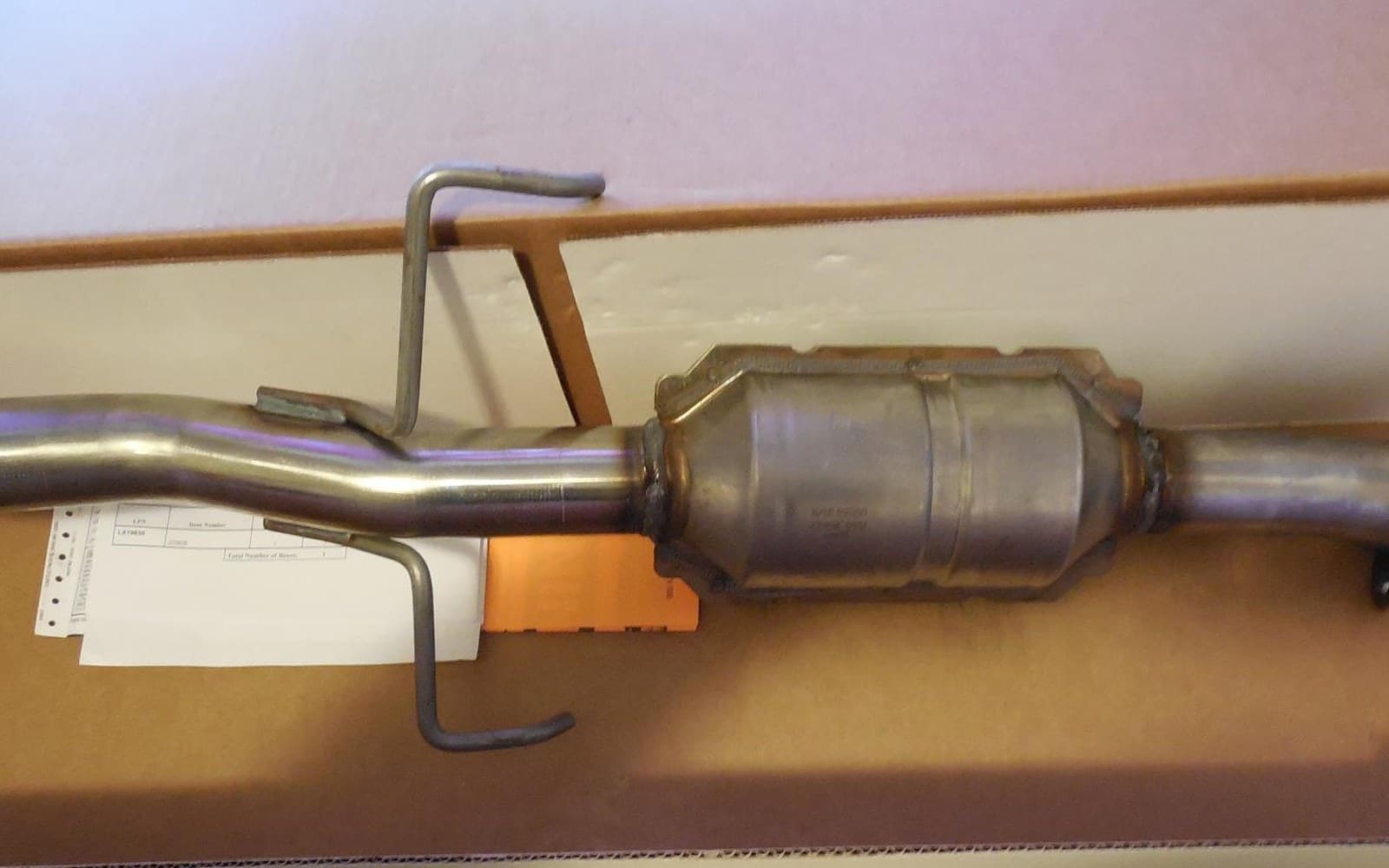
A high-flow catted downpipe keeps a catalytic converter, just a freer sport cat than the factory piece (often larger-cell). You get most of the flow benefit and a stronger note without going fully raw.
A catless downpipe removes that section. Exhaust exits the turbo with almost nothing in the way. Sound gets louder and more aggressive across the rev range. Some designs add a resonator to shape rasp; it adds only a little restriction compared with a cat.
Pick on three things: how loud you want it in traffic, whether the tune happens in the same visit, and how much drone you will tolerate on a steady cruise.
Why the ECU tune matters
The car's oxygen sensors and fuel maps expect the stock pipe. Open the flow and the readings change. Without a matching tune you can get a check-engine light, odd idle behaviour or a car that feels unfinished.
A proper remap recalibrates fueling and related limits for the new flow. Quote the exhaust upgrade Quezon City pipe and the tune together so the car leaves finished, not half-mapped.
Sound and daily driving in the Philippines
Quezon City traffic is stop-go and hot. A louder exhaust spends a lot of time at idle and low load. Catless setups that sound brilliant on an empty road can get tiring in EDSA-style crawl.
Heat under the car also climbs. Good heat shielding around the new pipe protects nearby lines and wiring. We check fitment clearance carefully on cars that sit low or run aftermarket aero.
If you want a reference point for how a performance exhaust sits on an American V8 daily, see our notes on Mustang exhaust builds.
Questions worth asking before you buy
- Is the car getting a tune in the same visit?
- Stainless or titanium? Titanium saves weight and shows heat colour; stainless is the tough daily option.
- Any existing exhaust leaks, cracked flex joints or tired oxygen sensors to fix first?
Bring the car in and we can look at the stock pipe on the lift before you commit.
FAQ
Does a high-flow catted downpipe still change the sound?
Yes. It will be deeper and more present than stock. Not as sharp as catless, but clearly not factory.
Will I get a check-engine light?
You can, especially on catless pipes without a tune. A matching remap is the clean way to avoid that.
Can I run a downpipe without other exhaust work?
Yes. Many owners start with the downpipe alone, then add a midpipe or cat-back later. The tune should reflect whatever is on the car that day.
Is this only for track cars?
No. Plenty of QC daily drivers run high-flow pipes. The question is how much volume you want to live with in traffic.
Related
- Service: exhaust upgrade Quezon City
- Also: ECU remap
- Car hub: Mustang exhaust
- Related guide: What a PMS covers on a performance car