Performance partsBy the BVT Tuning team · October 28, 2026 · 5 min read
ECU Tuning Explained
What an ECU remap actually changes, Stage 1 vs supporting-mod tunes, why a health check comes first, and what to ask in Quezon City.

An ECU remap changes the software that manages your engine. Depending on the car, that can include throttle response, fuel delivery, ignition timing, boost targets and torque limits.
The right approach starts with the car’s condition, its fitted parts and the fuel you use. For owners driving through Quezon City traffic or taking longer trips across the Philippines, everyday drivability matters as much as response under acceleration.
Here is ECU tuning explained: what changes, why checks come first and how to decide whether your hardware needs attention before a remap.
What the ECU controls
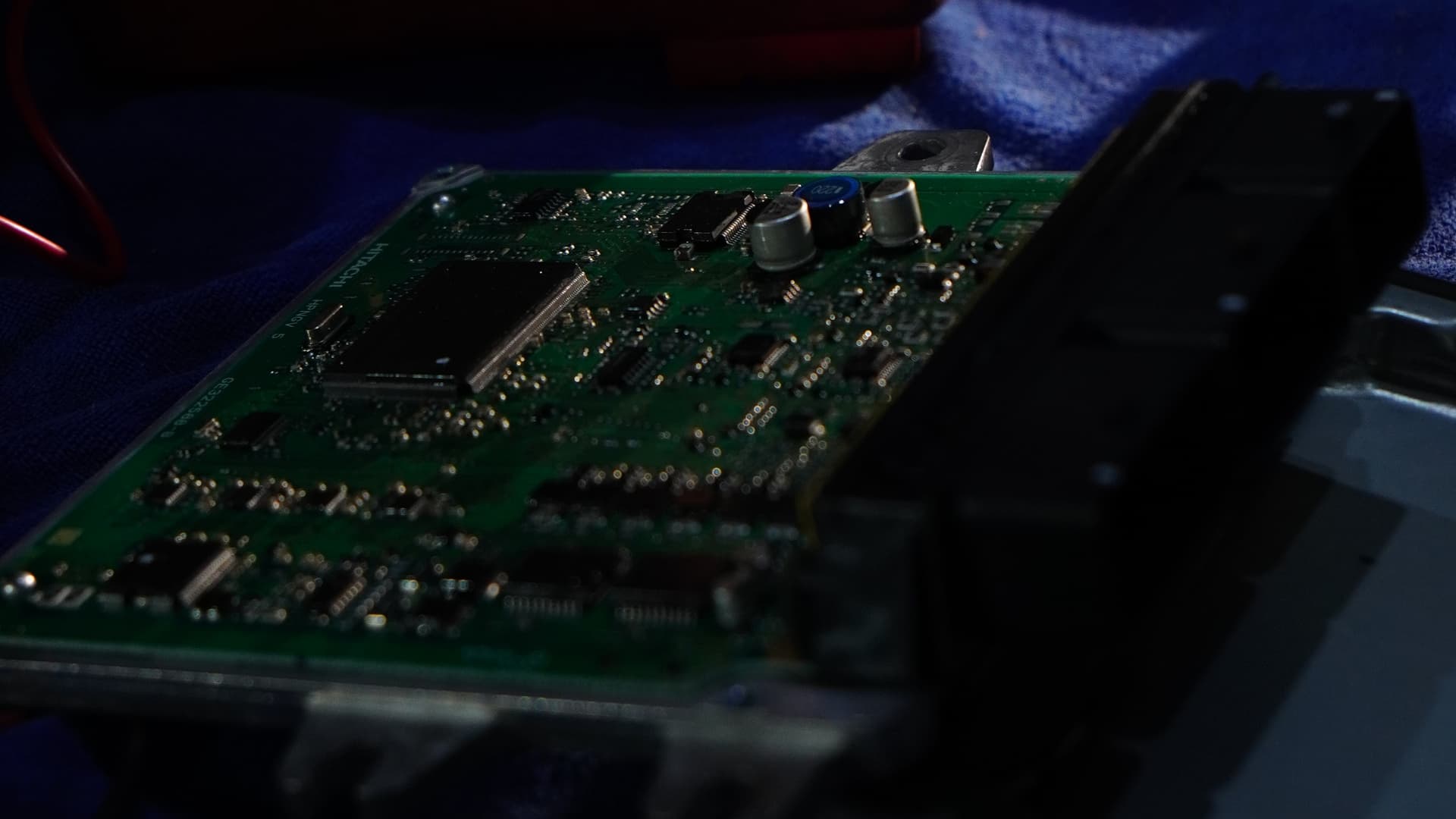
The engine control unit reads sensors and adjusts how the engine runs. Depending on the engine and control system, it manages:
- Fuel injection quantity and timing
- Ignition timing on petrol engines
- Boost control on turbocharged engines
- Throttle behaviour and torque requests
- Torque coordination with the transmission
- Temperature limits and protective responses
A remap adjusts selected settings within that system. The scope depends on the vehicle and the software available for it.
Tuning cannot repair a worn component, a boost leak or an existing ignition fault. Our ECU tuning Quezon City service starts with assessing whether the car is ready.
Stage 1 vs a supporting-mod tune
“Stage” labels are not standard across tuners. A useful quote should explain the required hardware, fuel and checks for your particular car.
| Stock-hardware tune, often called Stage 1 | Tune for supporting modifications |
|---|---|---|
Starting point | Factory engine hardware in suitable condition | A confirmed list of fitted or planned parts |
Calibration | Matched to the original hardware and agreed fuel | Matched to the changed hardware and agreed fuel |
Parts to assess | Existing intake, exhaust, cooling and drivetrain | Modified parts and any additional supporting requirements |
Checks required | Vehicle inspection and diagnostic assessment | Vehicle inspection, diagnostic assessment and installation checks |
A stock-hardware tune may suit an owner who wants a change in response while retaining the factory parts. Suitability depends on the engine, transmission and their condition.
Changes to the intake, turbocharger or exhaust—including a downpipe—may require software changes. Cooling upgrades may also be relevant, depending on the car and how it is used. Agree on the complete hardware plan before choosing a calibration.
Why the health check comes first
An existing fault can become more noticeable when engine load increases. Before proceeding, the assessment should consider:
- Stored and pending fault codes
- Spark plugs and ignition components, where applicable
- Fuel-system condition and available diagnostic readings
- Intake and boost plumbing
- Fluid leaks and maintenance history
- Cooling-system condition
- Transmission behaviour
- The fuel grade the calibration requires
The exact checks depend on the vehicle and any symptoms it has. Additional diagnosis may be needed before tuning can proceed.
Tell us about warning lights, hesitation, rough running, overheating or unusual gear changes—even if the issue only happens occasionally. Maintenance intervals and any replacement parts should follow the car’s requirements and condition.
What you may notice after tuning
Depending on the car and calibration, changes may include more responsive acceleration, smoother mid-range delivery or a different throttle feel. Results depend on the engine, hardware, fuel, mechanical condition and operating temperatures.
The plan should also account for how the transmission responds. Some vehicles may benefit from a separate discussion about transmission control unit software; an engine remap does not automatically include it.
Verification should use appropriate diagnostic data and controlled testing for the vehicle. Ask what will be checked after the software is installed and what follow-up support is available.
Tuning for Philippine driving conditions
Quezon City traffic, extended idling with the air conditioning on and high ambient temperatures all affect how a car operates. Cooling performance and behaviour after repeated acceleration deserve attention when planning a tune.
Be clear about the fuel grade you can consistently buy. The calibration’s fuel requirement must be practical for your usual routes, and you should follow that requirement after tuning.
Describe how you use the car: daily commuting, expressway travel, occasional weekend drives or track use. Each puts different demands on the engine, cooling system and transmission.
Questions to ask before booking a tune
- Is my exact model, engine and ECU software supported?
- What inspection and diagnostic checks come first?
- Does the calibration match my fitted hardware?
- What fuel grade will I need to use?
- Are any repairs or supporting parts required first?
- How will the car be checked after tuning?
- Can the original software be restored, and what does that involve?
- What support is available if a warning light or drivability issue appears?
Bring a complete modification list, including any previous tuning. Knowing what is already installed helps establish a suitable starting point.
FAQ
Is ECU tuning the same as module coding?
No. ECU tuning changes engine operating settings. Transmission tuning, where available, changes transmission settings.
Car coding Quezon City covers a different scope, such as configuring supported features or adapting replacement modules. The work required depends on the vehicle and control unit.
Will tuning affect my warranty?
Tuning may affect warranty coverage. The outcome depends on the warranty terms, the modification and the claim involved. Ask your warranty provider for written clarification before proceeding if coverage is a concern.
Can every car be tuned?
Support varies by model, engine, control unit and software version. Some vehicles require additional access procedures, while others may not have a suitable tuning option available.
Provide the model year, engine details and modification history so compatibility can be assessed.
Do I need to upgrade parts first?
That depends on the car, its condition and the intended calibration. Some tunes are designed for factory hardware. Others require specific supporting parts.
Resolve existing faults and confirm the hardware requirements before installing software.
Will servicing change after a remap?
A tuned car may need closer attention to fluids, ignition components and cooling, depending on its use. Service intervals and component specifications should be agreed for your particular vehicle. There is no single interval that suits every tuned car.
Can the car be returned to its original software?
This depends on the ECU, the tuning method and whether the original software is available. Confirm the restoration process before proceeding. Restoring software does not guarantee that previous changes will be undetectable or that warranty coverage will be restored.
Related services and guides
- Service: ECU tuning Quezon City
- Also: car coding Quezon City
- Car hub: supercar & luxury workshop
- Portfolio: Builds
- Related guide: Catted vs catless downpipes
Book a visit
Discuss your tuning plan with BVT Tuning at 44 Igdalig St, Quezon City. Send your car’s model year, engine, fitted modifications, usual fuel grade and any current symptoms so we can assess the next step.
Hours: Mon–Sat, 11:00–20:00
WhatsApp: 0998 593 6868
Brand names describe compatibility. BVT Tuning is an independent workshop.